


Home / Solar panel locations
Explore tailored solar panel systems for homes and businesses across Brisbane, the Gold Coast and the Sunshine Coast. Get clear advice on system sizing, equipment and installation.
12-year workmanship warranty
on every install
SAA accredited installers
and designers
4.9 out of 5 on Google
from 511 reviews
$0 upfront options
ask us how it works
Hybrid Solar Solutions Australia is based in Underwood and has been designing and installing solar systems since 2011. We service Brisbane and the corridor from the Gold Coast to the Sunshine Coast. Rather than recommend the same package for every home, we assess the property's roof, electricity use, equipment and future plans before proposing a system.
Solar panels only: a grid-connected solar system designed to offset electricity used during daylight and export eligible surplus energy.
Solar and battery together: a combined design can store some excess generation for later use. Battery capacity, power output, backup circuits and expected use should be assessed together.
Battery added later: an existing solar system may be suitable for a battery retrofit, subject to inverter compatibility, switchboard and site checks.
Commercial solar: businesses need a design based on operating hours, interval consumption, roof structure, electrical infrastructure and network requirements. See our commercial solar service.
Before accepting a quote, check the exact panel and inverter models, system capacity, proposed panel layout, estimated generation and the assumptions behind any savings estimate. The proposal should also identify installation inclusions, switchboard or meter work, network requirements, monitoring, exclusions and the applicable warranties.
Manufacturer product and performance warranties are different from the installer's workmanship warranty. Their coverage, duration, exclusions and claim process vary by product and contract. We recommend comparing the written warranty terms for the exact equipment and installation being quoted, rather than relying on a headline warranty number.
Our Underwood team services Brisbane and surrounding communities, with coverage extending from the Gold Coast to the Sunshine Coast. Local properties can differ significantly in roof orientation, shading, switchboard arrangements and network export conditions, so the final design is based on the individual site. We also provide local information for areas including Capalaba, Carindale, North Lakes, Chermside and Underwood.
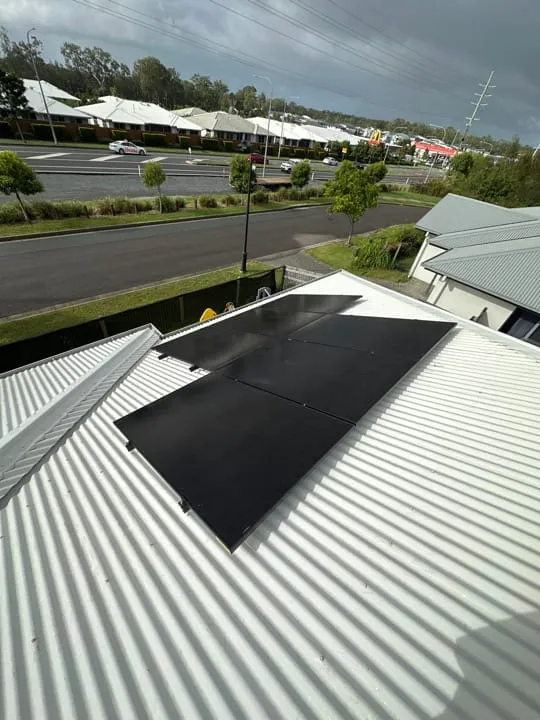
In a recent Google review, M. Zafar described a residential solar-and-battery installation at their Brisbane home, highlighting clear explanations, punctual installation and a tidy finish. Read more customer feedback and view recent photos on our Brisbane Google Business Profile.
Not necessarily. Your bill still depends on grid imports, daily supply charges, tariffs and export credits. A tailored estimate should use your actual usage and retailer rates.
Often, yes. Compatibility depends on the existing inverter, battery model, switchboard and system configuration. Tell us if storage is a future goal before the solar design is finalised.
A recent electricity bill, property address and information about any future battery or EV plans are a useful starting point. Roof or switchboard photos can also help with an initial review.
Explore our dedicated pages for solar installers in Brisbane and solar battery installation in Brisbane. You can also compare our residential solar, commercial solar and battery services, plus current information in our solar rebates guide.
Tell us whether you need solar panels, a battery-only upgrade or a combined system. Call 1300 364 449 or request a tailored quote online.
Get a free quote
Tell us about your property and power bills. We will reply with options sized to your home.
Get a free quoteCall 1300 36 44 49See how much you can save today. Tell us a few details and our team will call you with a tailored quote.

Eligible rooftop solar systems may receive an upfront discount through the Australian Government's Small-scale Renewable Energy Scheme (SRES), using small-scale technology certificates (STCs). Eligible home batteries may qualify for the Cheaper Home Batteries Program when connected to new or existing solar PV and installed under the current program rules. The installer or retailer will usually show the applicable discount in the quote and explain any assignment of certificates. Check current government eligibility requirements and make sure the quote lists the incentive separately from the system price.
Estimate payback by comparing the net installed cost with the expected annual bill savings. A sound calculation should use your electricity interval data, solar generation estimate, self-consumption, export rate, retail tariff, daily supply charges, system degradation, maintenance assumptions and any battery replacement costs. Incentives should be shown separately, and savings should not assume that all solar generation is used on site. Ask for the assumptions and sensitivity range rather than relying on a single guaranteed payback figure.
Compare exact model numbers, product warranties, performance data, approved-product status where relevant, inverter capacity and compatibility with your proposed system. The design should suit your roof orientation, shading, available space, energy use, network export limits and any future battery plans. Check the installer's qualifications and accreditation, monitoring, after-sales support and what is included or excluded from the quote. Do not choose equipment on brand name or price alone.
There is no single annual or lifetime saving that applies to every household. Savings depend on the system's generation, how much electricity is used while the sun is shining, the retail electricity rate, feed-in tariff, system cost and any ongoing charges. A reliable estimate should use your recent bills or smart-meter interval data and clearly state its assumptions. Treat broad lifetime-saving figures as indicative rather than guaranteed.
Solar installation costs in Queensland vary with system capacity, panel and inverter models, roof material and height, access, switchboard condition, network requirements and the complexity of the job. Battery storage and backup add to the price. Eligible solar STC discounts may reduce the upfront cost, but the amount depends on the system and installation date. Compare current, itemised quotes rather than relying on old average prices or a headline package price.
Solar panels convert sunlight into direct-current (DC) electricity. An inverter converts this into alternating-current (AC) electricity that your home or business can use. Solar power is used on site first, reducing the amount bought from the grid. Surplus electricity may be exported for a feed-in tariff under your retail plan. If solar generation is insufficient, the property draws power from a battery if available or from the electricity grid.
Solar can work well across Queensland, but the result depends on the property's roof orientation, shading, system design, local network rules and how electricity is used. Strong sunlight alone does not guarantee a short payback period. A useful assessment compares expected generation with your daytime consumption, retail tariff and export rate, and checks roof and switchboard suitability. Ask for a site-specific design and realistic savings assumptions.
The right solar system size depends on your electricity consumption, daytime usage, roof space and orientation, shading, inverter and phase configuration, network export limits and future plans such as an electric vehicle or battery. Quarterly bill totals are a starting point, but smart-meter interval data gives a clearer picture of when you use power. A site-specific assessment is more reliable than selecting a system from a generic bill threshold.
A fair solar quote clearly identifies the panel and inverter models, system capacity, design, estimated generation, installation scope, total price, exclusions, network approval responsibilities and warranty terms. Roof access, switchboard work and other site-specific requirements can affect cost. Compare like-for-like proposals and check whether any eligible incentive is deducted from the price. The lowest headline price may not include the same equipment or installation work.
A workmanship warranty generally covers defects arising from the installer's work, subject to the written warranty terms. The exact coverage, duration, exclusions and claim process vary by provider. Ask for the warranty document and check whether it covers installation defects, roof penetrations, cabling, mounting and damage caused during installation. Keep your signed quote, commissioning documents and product warranties together.
Compare exact panel model numbers using efficiency, temperature coefficient, product warranty, performance warranty, degradation information, dimensions and mechanical load ratings. Check whether the model is currently available and listed on the relevant approved product register where required. Brand reputation can be useful, but the suitability of the specific model and the quality of the system design and installation matter more than a generic 'best panel' label.
A grid-connected system suits properties connected to the electricity network and can reduce daytime grid purchases. A hybrid system combines solar with a compatible battery, allowing stored energy to be used later and potentially providing backup when configured for it. An off-grid system operates without a normal grid connection and needs enough generation and storage to meet demand through low-sun periods. The right design depends on your connection, energy use, reliability needs, budget and site conditions.
A grid-connected solar system lets a property use solar electricity as it is generated and export surplus energy to the grid when permitted. This can reduce grid electricity purchases, particularly when appliances operate during daylight hours. The financial benefit depends on the system's generation, self-consumption, retail tariff, feed-in tariff and network export limits. A standard grid-connected inverter usually shuts down during a blackout unless a suitable backup system is installed.
Yes, JinkoSolar is recognized as a reputable and reliable solar panel manufacturer in the global market, including Australia. Here are several reasons why JinkoSolar panels are considered good options:
Overall, JinkoSolar panels are considered a good choice for those looking to install solar systems due to their combination of high efficiency, competitive pricing, reliable performance, and strong warranty support. However, it's essential to evaluate specific models and consult with a reputable solar installer to ensure the panels meet your energy needs and are suitable for your location and installation requirements.
Q CELLS panels should be compared by exact model rather than by brand reputation alone. Review the current Australian datasheet, efficiency, temperature coefficient, product and performance warranties, availability and approved-product status where relevant. Confirm the model number in your quote and check who provides local warranty support.
Canadian Solar offers a range of panel models for residential and commercial systems. Whether a particular panel is suitable depends on its exact model, efficiency, temperature coefficient, product and performance warranties, dimensions and approved-product status where relevant. Ask for the model number and current datasheet, then compare it with alternatives on the same criteria. The overall system design and installation quality also affect performance.
JinkoSolar offers multiple panel models, so suitability depends on the exact product rather than the brand name alone. Review the current datasheet, module efficiency, temperature coefficient, product and performance warranties, dimensions and approved-product status where relevant. Ask for the exact model number in your quote and compare it with alternatives on the same criteria.
Canadian Solar manufactures several solar panel ranges, and the cell technology, efficiency and construction vary by model and generation. Check the exact model datasheet for cell type, module efficiency, temperature coefficient, dimensions, mechanical load rating and product warranty. Ask your installer to compare the proposed model with alternatives using the same performance and warranty criteria.
Start with recent electricity bills and, if available, interval data from your smart meter. Review total daily consumption and how much power is used during daylight hours. The final design should also account for roof orientation, shading, available panel area, switchboard and meter configuration, network export limits and any future plans such as a battery or electric vehicle. A site-specific assessment is more reliable than choosing a system size from household size alone.
Savings depend on system size, solar generation, when you use electricity, your retailer tariff, export rate, daily supply charges and any battery settings. A system may reduce grid purchases, but it will not necessarily eliminate the electricity bill. Ask for the assumptions behind any savings estimate and compare them with your actual usage data and electricity rates.
A useful solar quote should identify the exact panel and inverter models, system capacity, proposed layout, estimated generation assumptions, installation scope, total price, exclusions, network approval responsibilities, product and workmanship warranties, and any government incentive shown separately. For batteries, it should also state usable capacity, power output, backup scope and compatibility. Compare itemised proposals on a like-for-like basis.
Many standard residential installations can be completed in a day on site, but the overall timeline also includes assessment, design, network approval, equipment availability and scheduling. Roof access, system size, switchboard work, weather and site complexity can change the time required. Your installer should confirm the expected schedule for your property.

At Hybrid Solar Solutions Australia we are passionate about providing our regional solar & Battery customers in more remote areas with the same access to solar power as the rest of Australia. Anybody living in country Australia knows just how hot it can get, the sunshine makes Australia one of the best places in the world to invest in power for your homes and businesses.








Honest feedback from homeowners and businesses across Brisbane, Melbourne and Sydney. See what it is like to work with our team before you request a quote.
Read our Google reviewsCopyright @2026 Hybrid Solar Solutions Australia. All Rights Reserved


